Showing posts with label movies. Show all posts
Showing posts with label movies. Show all posts
Friday, March 14, 2008
Get Smart Out June 20
I, for one, am looking forward to this one. How can it go wrong with Terence Stamp, Steve Carell, and Alan Arkin?


Wednesday, October 31, 2007
ART CLASSIC #5
Poltergeist:
The Most Perfect Horror Film--Ever
Director: Tobe Hooper (The Texas Chainsaw Massacre)
Writer: Steven Spielberg (story)
Screenplay: Steven Spielberg, Michael Grais, and Mark Victor
Special Effects: Industrial Lights and Magic (Lucas)
Producers: Kathleen Kennedy, Frank Marshall, and Steven Spielberg
Musical Score: Jerry Goldsmith [1] (Oscar, Best Musical Score, The Omen) [2]
This year is the 25th anniversary of the film. One reason Poltergeist is so perfect is because of the people involved in the production: Tobe Hooper, Steven Spielberg, Jerry Goldsmith, and George Lucas' Industrial Lights and Magic. The list reads like a who's who of classic and expert film production. How could it not be perfect with this ensemble?
Many horror films have been made in over a hundred years of film making and certainly, most are a dime a dozen. There are many genres of horror films: the slasher films, creature features, 'B' horror, to name a few. Nearly all of the genres seem apt to become dated as they are often reflective of a specific period in cultural time and tossed on the winds of fad culture. Only one genre stands the test of time, no matter how old the story or film becomes: The Ghost Story. The cast of creators aside, what makes Poltergeist so perfect is the story. What makes the film so unusual as a horror film is that it does have great writing. But this is no usual Ghost Story. The Ghost Story is merely the vehicle for the larger message (which horror films almost never possess).
Poltergeist uses all the typical devices of a classic Ghost Story horror film: creaking sounds, subtle voices, play on light and dark, simulated heartbeat sounds, things emerging from the periphery, cropping, surprise, terror juxtaposed with ordinary objects, people, etc. Spielberg, et al. take the right approach with fear, which is, that it is simple and not complicated, and doesn't require a lot of gore. It is this sparseness and simplicity and earnestness of acting by a then unknown cast of characters that makes the film so terrifying. I saw this film when I was eleven years old. I watched it at a friend's house on cable. It was scandalously uncut and it terrified the living daylights out of me. It was the first horror film that really blew me away. However, I was too young to appreciate its broader meaning. It is not only a timeless ghost story but a timeless cultural commentary as well.
The trailer to the film makes the best plot summary:
The film is a classic Ghost Story but it is also about the microcosm of house/home/family that symbolize the country. It's about patriotism and nostalgia, economic downturns, innocence and the loss of it, greed and abundance, form without substance in American culture, and ultimately, the loss of the American Dream.
The Freelings and the American Dream
 Photo Credit
These "free" people live in a suburban home in a development called Cuesta Verde (loosely translated = "it costs green"). It is a manufactured neighborhood of suburban sprawl where all of the homes look the same, which is a quality that recalls Malvina Reynolds' song, "Little Boxes." [3] The family's life reads like a commercial for middle class abundance: the perfect house, 2.5 kids, toys and other products filling the house, etc. Douglas Kellner states, "By depicting with affection its residents, houses, goods, toys, and electronics, it presents advertisements for a U.S. way of life which defines happiness in terms of middle-class lifestyle and consumption." [4] Kellner calls Spielberg's films "clever ideological fables" and "meticulously constructed ideology machines." [5] He states, "The film attempts to manipulate its audience through carefully planned, carefully paced jolts, special effects, frightening scenes, sentimental depictions of a loving family, and the assuring presence of technology, professionals, and spiritual powers. " [6]
Kellner's observations are poignant and astute. I personally think the term "sentimental" as applied to the depictions of the Freelings as a loving family would be better termed "idealized." In the film, the family is shown as a tight unit that only begins to break up under the assault of the poltergeist intrusion. They share a bed, they joke and play with one another, and even when they embark on the rescue of Carol Anne, they show courage and a tight bond. When deciding who should enter the closet/portal to rescue the child, Diane convinces Tangina (the spiritualist) that she should go since she is Carol Anne's mother. Steven says that he should go instead. Diane says, "Who's strong enough to stay up here and hold the rope?" He relents and as she starts walking into the closet, she turns and
 shouts to Steven, "Steven, don't let go!" Diane goes into the unknown and Steven "tows the line." The image of the Freelings is idealized and heroic. They face their fears to save their daughter--head on. And this is no difficult task, because the supernatural force that they are fighting knows their fears and exploits them.

© Stephanie Lewis, 2007
[1] imdb.com
[2] imdb.com
[3] The Red Rock Resistance
[4] ejumpcut.org
[5] ibid.
[6] ibid.
[7] Monochrom
[8] Hedrick Smith Productions
[9] wikipedia.org
[10] U.S. Department of Housing and Urban Development
Writer: Steven Spielberg (story)
Screenplay: Steven Spielberg, Michael Grais, and Mark Victor
Special Effects: Industrial Lights and Magic (Lucas)
Producers: Kathleen Kennedy, Frank Marshall, and Steven Spielberg
Musical Score: Jerry Goldsmith [1] (Oscar, Best Musical Score, The Omen) [2]
This year is the 25th anniversary of the film. One reason Poltergeist is so perfect is because of the people involved in the production: Tobe Hooper, Steven Spielberg, Jerry Goldsmith, and George Lucas' Industrial Lights and Magic. The list reads like a who's who of classic and expert film production. How could it not be perfect with this ensemble?
Many horror films have been made in over a hundred years of film making and certainly, most are a dime a dozen. There are many genres of horror films: the slasher films, creature features, 'B' horror, to name a few. Nearly all of the genres seem apt to become dated as they are often reflective of a specific period in cultural time and tossed on the winds of fad culture. Only one genre stands the test of time, no matter how old the story or film becomes: The Ghost Story. The cast of creators aside, what makes Poltergeist so perfect is the story. What makes the film so unusual as a horror film is that it does have great writing. But this is no usual Ghost Story. The Ghost Story is merely the vehicle for the larger message (which horror films almost never possess).
Poltergeist uses all the typical devices of a classic Ghost Story horror film: creaking sounds, subtle voices, play on light and dark, simulated heartbeat sounds, things emerging from the periphery, cropping, surprise, terror juxtaposed with ordinary objects, people, etc. Spielberg, et al. take the right approach with fear, which is, that it is simple and not complicated, and doesn't require a lot of gore. It is this sparseness and simplicity and earnestness of acting by a then unknown cast of characters that makes the film so terrifying. I saw this film when I was eleven years old. I watched it at a friend's house on cable. It was scandalously uncut and it terrified the living daylights out of me. It was the first horror film that really blew me away. However, I was too young to appreciate its broader meaning. It is not only a timeless ghost story but a timeless cultural commentary as well.
The trailer to the film makes the best plot summary:
The film is a classic Ghost Story but it is also about the microcosm of house/home/family that symbolize the country. It's about patriotism and nostalgia, economic downturns, innocence and the loss of it, greed and abundance, form without substance in American culture, and ultimately, the loss of the American Dream.
The Freelings and the American Dream
The family is Steven and Diane Freeling and their children Dana, Robbie, and Carol Anne, and their dog E. Buzz. First, their name is "Free-ling." Much like "underling" or "earthling," it is not so much a name as a designation.
 Photo Credit
These "free" people live in a suburban home in a development called Cuesta Verde (loosely
translated = "it costs green"). It is a manufactured neighborhood of suburban sprawl where all of the homes look the same, which is a quality that recalls Malvina Reynolds' song, "Little Boxes." [3] The family's life reads like a commercial for middle class abundance: the perfect house, 2.5 kids, toys and other products filling the house, etc. Douglas Kellner states, "By depicting with affection its residents, houses, goods, toys, and electronics, it presents advertisements for a U.S. way of life which defines happiness in terms of middle-class lifestyle and consumption." [4] Kellner calls Spielberg's films "clever ideological fables" and "meticulously constructed ideology machines." [5] He states, "The film attempts to manipulate its audience through carefully planned, carefully paced jolts, special effects, frightening scenes, sentimental depictions of a loving family, and the assuring presence of technology, professionals, and spiritual powers. " [6]Kellner's observations are poignant and astute. I personally think the term "sentimental" as applied to the depictions of the Freelings as a loving family would be better termed "idealized." In the film, the family is shown as a tight unit that only begins to break up under the assault of
 the poltergeist intrusion. They share a bed, they joke and play with one another, and even when they embark on the rescue of Carol Anne, they show courage and a tight bond. When deciding who should enter the closet/portal to rescue the child, Diane convinces Tangina (the spiritualist) that she should go since she is Carol Anne's mother. Steven says that he should go instead. Diane says, "Who's strong enough to stay up here and hold the rope?" He relents and as she starts walking into the closet, she turns and
 shouts to Steven, "Steven, don't let go!" Diane goes into the unknown and Steven "tows the line." The image of the Freelings is idealized and heroic. They face their fears to save their daughter--head on. And this is no difficult task, because the supernatural force that they are fighting knows their fears and exploits them.


Photo Credit
 Photo Credit
 Photo Credit
The theme of the American Dream is further reinforced by elements in the film. First, the film opens with a very blatant use of the Star-Spangled Banner being played at the end of day broadcast of a network channel on television. Steve Freeling has fallen asleep in his chair in front of the television as the broadcast day winds down in this iconic way. I don't think it's unintentional on Steven Spielberg's part. Opening the film in this way is a tight piece of foreshadowing as well as a symbolic representation of the American Dream coming to an end: in this case, reverting to the low power "snow" mode of the television channel. It is also a genius creative choice in terms of the musical score. This scene is shown not once, but twice--the second time being as the whole family (except the teenage daughter) are asleep in the parents' bed and right before the poltergeist makes contact with Carol Anne and causes an earthquake (only in the Freelings home, interestingly enough). Johannes Grenzfurthner states, "It is no coincidence that in the film “Poltergeist” from the early 80s Tobe Hooper used just this phenomenon as something calculated to give one the creeps. After the American national anthem the broadcast is over; the snowstorm sets in. And it doesn’t take long for the eerie voices of the damned to start calling out of the hypnotic blizzard. It seems as if we would like to ban this snow from our world." [7]
As Kellner stated, happiness is defined "in terms of middle-class lifestyle and consumption." The American Dream to Spielberg and Hooper is about the acquisition of a home, updated technology, a swimming pool, 2.5 children, and an abundant collection of (Lucas-based) toys for those children. The teenage daughter even has her own phone in her room. This is the age of innocence and abundance for the Freelings. The musical score by Jerry Goldsmith reinforces this period of the film by scoring it initially with what is basically a lullaby. Gradually, as the Freelings' lives go out of control, the score alternates with darker and moodier tones with intense, bombastic music.
Besides the use of the Star-Spangled Banner, economics (and politics) are alluded to in another subtle way. Near the beginning of the film, Steve Freeling is laying on his stomach on their bed while Diane is rolling joints. He is reading a book entitled Reagan: The Man, The President. [8] Reagan would later become the President who posited "Trickle-down Economics" which is also known as Reaganomics or Supply-side Economics. "Proponents of these policies claim that they will promote new investment and economic growth, thereby indirectly benefiting people in lower tax brackets who do not receive the direct benefits of lower taxes. Opponents characterize this as a claim that the people who would otherwise pay the tax will distribute their benefit to less wealthy individuals, so that a fraction will reach the general population and stimulate the economy." [9] In addition, even though the modern War on Drugs was started by President Nixon in 1969, it was Reagan who created the Office of National Drug Control Policy in 1988. So, the irony is not lost on the contemporary viewer when watching Diane prepare marijuana for their mutual consumption while Steve is reading a book on Reagan. There was also a real life economic contradiction going on during the age of Reaganomics. While the economy was being presented as good, the reality was that it wasn't. Mortgage interest rates only dropped below 10% once during the Reagan Presidency (1987) . During the year that Poltergeist takes place, the mortgage interest rate was 14.72/14.74% (fixed/adjustable). [10] So, buying a home was out of reach for most low income wage earners--unless they were willing to sacrifice their family on the altar of work to "keep up with the Joneses." Viewers of the film know that Steve Freeling is upper middle class because his boss, Mr. Teague, offers him a brand new home at no cost to keep him employed because Steve is singlehandedly responsible for bringing the company over $70 million in real estate sales. However, pitted against this wealth and idealistic family harmony is the isolation of the nuclear family, the forces of nature, failed technology, and the mesmerism of television. We also eventually find out that the initial cause for all the disturbances in the Freelings' house is GREED. Mr. Teague, knowingly, and probably in cahoots with other questionable characters, decided to cut corners and increase profits by only moving the headstones of the cemetery on which the Freelings' house rests.
The Tuthills
The Tuthills are the Freelings' next door neighbors. They have achieved the same measure of success as the Freelings although they are presented as less sophisticated (e.g. the son is portrayed as a slack-jawed child). Mr. Tuthill is competitive with Steve and it is obvious that neither wants a "neighborly" relationship with the other. The competition is expressed through the television remote fight that they have when both are apparently on the same frequency and Mr. Tuthill's children would like to watch Mr. Rogers and Steve would like to watch football with his buddies. The scene is one of the most humorous but also the clearest representation of their competitive relationship. The men have achieved everything (presumably), yet assert their power in this childish way. The Tuthills are not only competitive, they are oblivious to the travails the Freelings are enduring in their home. None of the disturbances are happening on their property. But even when they are pulling Diane from the skeleton-filled swimming pool, it is unclear whether or not that they notice the bodies at all. They seem to respond only to the screams of the children inside the house. It is not until the house finally implodes that they seem to react to the supernatural events. It is possible, however, that they perceive the imploding of the house to be related to a gas main explosion. Either way, the impression left with the viewer of the film is that the family is in utter isolation in its experiences, even though they are surrounded by suburban sprawl and neighbors that are literally a stone's throw away.
Man Versus Nature
Three forces of nature are pitted against the Freelings. One is the manifesting force that Diane calls "another side of nature" which is the appearance of supernatural events in the home. The other two more tangible forces of nature are the dead tree that springs to life and tries to devour Robbie and the tornado (that is presumed to be a part of the thunderstorm) that whisks the tree away before it has a chance to do so. Robbie shows an early fascination with the dead old tree in the film. He is obsessed with it--terrified by it. It sparks his imagination and disturbs his sleep. Initially, it seems out of place in the new and shiny opulence of the suburban landscape. It seemed to be carefully left there to "add character." In the end, it becomes the fly in the ointment for the Freelings. Not only does it try to devour Robbie, it acts as what appears to be a deliberate distraction for the supernatural elements to abduct Carol Anne, which they do. The storm and subsequent tornado once again seem to only be happening at the Freelings' home. Historically, The Storm has been a symbolic presence in all the arts to represent the forces of nature that humankind battles against. Everything else in the Freelings' lives up to this point seems to be under control. Nature is not under control and supernatural and natural forces conspire to destroy their dream of American "normalcy."
Technology Run Amok
Another theme of the film is that the comfort that technology brings to the modern life is fleeting and unpredictable. It is the illusion of comfort at best. Shorts and manufacturer's defects happen. Faulty programming happens. Warranties run out. In the Freeling home, light bulbs burn with extreme intensity and don't burn out. They flash, spark, and flicker. Most notably, remote control and electronic toys move on their own and eventually spin around the children's room in a frenzy. The viewer is confronted by an electronic robot in one scene when the paranormal researchers open the door to the children's room. The robot approaches the viewer on its own power, laughing maniacally. At the same time, a lamp flies through the air and "plugs itself in" and turns on. A record is played by a compass point. It is during this frenzy of spinning toys that we are once again reminded of the amount of things the children possess. These things are out of control in this context. Later we are simultaneously reminded of affluence and recalcitrant technology in the form of Robbie's ominous talking clown at the foot of his bed. Eventually, the fear that the poltergeist knows he has comes true and the clown attacks and tries to strangle the boy. The clown's face has become contorted with evil and he also laughs maniacally as he attacks the boy. Robbie is at once strangled by what Whitman called the "mania of owning things" and technology. Fortunately, the ordinarily fearful and timid Robbie finally gains his courage, owns his power, and rips into the wayward toy shouting, "I hate you!" Of course, by now, the viewer has realized that the clown was another distraction to try and abduct Carol Anne a second time.
 Robbie's Clown, Before (Photo Credit)
 Robbie's Clown, After (Photo Credit)
As Kellner stated, happiness is defined "in terms of middle-class lifestyle and consumption." The American Dream to Spielberg and Hooper is about the acquisition of a home, updated technology, a swimming pool, 2.5 children, and an abundant collection of (Lucas-based) toys for those children. The teenage daughter even has her own phone in her room. This is the age of innocence and abundance for the Freelings. The musical score by Jerry Goldsmith reinforces this period of the film by scoring it initially with what is basically a lullaby. Gradually, as the Freelings' lives go out of control, the score alternates with darker and moodier tones with intense, bombastic music.
Besides the use of the Star-Spangled Banner, economics (and politics) are alluded to in another subtle way. Near the beginning of the film, Steve Freeling is laying on his stomach on their bed while Diane is rolling joints. He is reading a book entitled Reagan: The Man, The President. [8] Reagan would later become the President who posited "Trickle-down Economics" which is also known as Reaganomics or Supply-side Economics. "Proponents of these policies claim that they will promote new investment and economic growth, thereby indirectly benefiting people in lower tax brackets who do not receive the direct benefits of lower taxes. Opponents characterize this as a claim that the people who would otherwise pay the tax will distribute their benefit to less wealthy individuals, so that a fraction will reach the general population and stimulate the economy." [9] In addition, even though the modern War on Drugs was started by President Nixon in 1969, it was Reagan who created the Office of National Drug Control Policy in 1988. So, the irony is not lost on the contemporary viewer when watching Diane prepare marijuana for their mutual consumption while Steve is reading a book on Reagan. There was also a real life economic contradiction going on during the age of Reaganomics. While the economy was being presented as good, the reality was that it wasn't. Mortgage interest rates only dropped below 10% once during the Reagan Presidency (1987) . During the year that Poltergeist takes place, the mortgage interest rate was 14.72/14.74% (fixed/adjustable). [10] So, buying a home was out of reach for most low income wage earners--unless they were willing to sacrifice their family on the altar of work to "keep up with the Joneses." Viewers of the film know that Steve Freeling is upper middle class because his boss, Mr. Teague, offers him a brand new home at no cost to keep him employed because Steve is singlehandedly responsible for bringing the company over $70 million in real estate sales. However, pitted against this wealth and idealistic family harmony is the isolation of the nuclear family, the forces of nature, failed technology, and the mesmerism of television. We also eventually find out that the initial cause for all the disturbances in the Freelings' house is GREED. Mr. Teague, knowingly, and probably in cahoots with other questionable characters, decided to cut corners and increase profits by only moving the headstones of the cemetery on which the Freelings' house rests.
The Tuthills
The Tuthills are the Freelings' next door neighbors. They have achieved the same measure of success as the Freelings although they are presented as less sophisticated (e.g. the son is portrayed as a slack-jawed child). Mr. Tuthill is competitive with Steve and it is obvious that neither wants a "neighborly" relationship with the other. The competition is expressed through the television remote fight that they have when both are apparently on the same frequency and Mr. Tuthill's children would like to watch Mr. Rogers and Steve would like to watch football with his buddies. The scene is one of the most humorous but also the clearest representation of their competitive relationship. The men have achieved everything (presumably), yet assert their power in this childish way. The Tuthills are not only competitive, they are oblivious to the travails the Freelings are enduring in their home. None of the disturbances are happening on their property. But even when they are pulling Diane from the skeleton-filled swimming pool, it is unclear whether or not that they notice the bodies at all. They seem to respond only to the screams of the children inside the house. It is not until the house finally implodes that they seem to react to the supernatural events. It is possible, however, that they perceive the imploding of the house to be related to a gas main explosion. Either way, the impression left with the viewer of the film is that the family is in utter isolation in its experiences, even though they are surrounded by suburban sprawl and neighbors that are literally a stone's throw away.
Man Versus Nature
Three forces of nature are pitted against the Freelings. One is the manifesting force that Diane calls "another side of nature" which is the appearance of supernatural events in the home. The other two more tangible forces of nature are the dead tree that springs to life and tries to devour Robbie and the tornado (that is presumed to be a part of the thunderstorm) that whisks the tree away before it has a chance to do so. Robbie shows an early fascination with the dead old tree in the film. He is obsessed with it--terrified by it. It sparks his imagination and disturbs his sleep. Initially, it seems out of place in the new and shiny opulence of the suburban landscape. It seemed to be carefully left there to "add character." In the end, it becomes the fly in the ointment for the Freelings. Not only does it try to devour Robbie, it acts as what appears to be a deliberate distraction for the supernatural elements to abduct Carol Anne, which they do. The storm and subsequent tornado once again seem to only be happening at the Freelings' home. Historically, The Storm has been a symbolic presence in all the arts to represent the forces of nature that humankind battles against. Everything else in the Freelings' lives up to this point seems to be under control. Nature is not under control and supernatural and natural forces conspire to destroy their dream of American "normalcy."
Technology Run Amok
Another theme of the film is that the comfort that technology brings to the modern life is fleeting
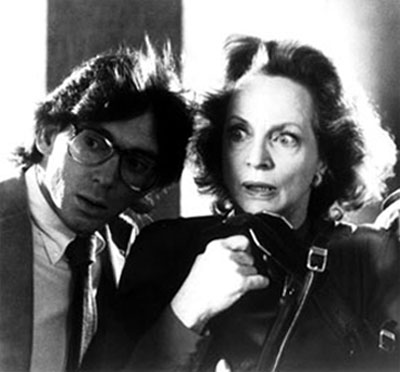 and unpredictable. It is the illusion of comfort at best. Shorts and manufacturer's defects happen. Faulty programming happens. Warranties run out. In the Freeling home, light bulbs burn with extreme intensity and don't burn out. They flash, spark, and flicker. Most notably, remote control and electronic toys move on their own and eventually spin around the children's room in a frenzy. The viewer is confronted by an electronic robot in one scene when the paranormal researchers open the door to the children's room. The robot approaches the viewer on its own power, laughing maniacally. At the same time, a lamp flies through the air and "plugs itself in" and turns on. A record is played by a compass point. It is during this frenzy of spinning toys that we are once again reminded of the amount of things the children possess. These things are out of control in this context. Later we are simultaneously reminded of affluence and recalcitrant technology in the form of Robbie's ominous talking clown at the foot of his bed. Eventually, the fear that the poltergeist knows he has comes true and the clown attacks and tries to strangle the boy. The clown's face has become contorted with evil and he also laughs maniacally as he attacks the boy. Robbie is at once strangled by what Whitman called the "mania of owning things" and technology. Fortunately, the ordinarily fearful and timid Robbie finally gains his courage, owns his power, and rips into the wayward toy shouting, "I hate you!" Of course, by now, the viewer has realized that the clown was another distraction to try and abduct Carol Anne a second time.
 Robbie's Clown, Before (Photo Credit)
 Robbie's Clown, After (Photo Credit)
The Medium is the Message
 The most apparent technology in the film is the television. It is the through the television that Carol Anne is first contacted by the poltergeist. It whispers to her and eventually reaches out with a ghostly appendage to touch her. It shoots energy through her prior to the "earthquake" in the
 Freelings' home. Once abducted, she communicates through it with the family. Ultimately, her communication through the television is unsatisfying and ineffective. One can't have an intimate relationship with a television. Steve Freeling has fallen asleep in front of the television. It is kept running in the background. At one time, the whole family falls asleep in front of the television. There is a television in every room. It is essentially treated like a member of the family. But this "member of the family" has a hidden agenda.
It seeks to seduce the most innocent corporeal member of the family into its realm. One doesn't have to delve too deeply to understand the statement Spielberg and Hooper are trying to convey. There's even a touch of irony after the poltergeist contacts Carol Anne the first time through the television and after she becomes fascinated with the low power station from which the poltergeist's communications come. The scene takes place during breakfast on Monday morning. Carol Anne is too young to go to school. Once the other two children start heading off to school, Carol Anne heads over to the small television in the kitchen, climbs up on a stool and switches the channel to the snow channel to see if she can hear the voices again. Diane passes Carol Anne as she's cleaning up the breakfast table and declares, "Oh honey, I wish you wouldn't stare at that channel. You'll hurt your eyes." As Diane utters these words, she simultaneously changes the channel to a violent war film. Again, the irony is deliberate and not lost on the viewer. One will hurt the child's eyes. The other will hurt the child's mind (as many believe, though this is not necessarily agreed upon by experts). Of course, we know today that Spielberg personally believes this because he took the extra effort in the re-release of E.T. to digitally remove the guns out of the federal agents' hands at the end and replace them with walkie talkies--because he believed that ultimately, it was too violent an image for a children's film.
Those Who Don't Study History....
...are condemned to repeat it. We've all heard the adage. The Freelings also express 1) The lack of knowledge of history, and 2) seem to not be capable of learning from their experiences. These two qualities are extremely prevalent in Americans (one could, of course, argue all of humanity). Steven is the top salesperson at the company who built his house and he was not aware of Mr. Teague leaving the bodies and just moving the headstones prior to construction of the subdivision? The family is literally blissfully unaware that their house is on a sea of bodies--some of which are centuries old. Our ancestors are our history. Ghosts symbolize memory and history. When the ghosts are finally captured on film, Diane says, "Look at all of them." Robbie responds, "Where are they all coming from?" This dialogue expresses their obliviousness to the true history of the house.
The Freelings have encountered a poltergeist that tried to drive them out, devour their son, and succeeded at kidnapping their daughter. They are told by Tangina that the other presence inside the house was The Beast, or Lucifer, or Satan, or Beelzebub, or the Lord of the Flies, or whatever you want to call him/it. It is after all this, that they STILL decide to spend one more day (and night) at the house. It seems crazy by any standard. They seem determined to return to the bliss and normalcy that they had before--to their own detriment. Steve goes to work. Diane has the children tuck themselves into the same beds that are in the same room where Steven faced The Beast. While they're tucking themselves in, she goes into the bathroom to dye her hair. The children are left alone to fend for themselves even after the extreme risk Diane took by spelunking via a hemp rope into the supernatural world of the poltergeist and The Beast and exiting through the living room ceiling. The results of this laissez-faire attitude are predictable.
The "Experts"
In Poltergeist, the experts are the three paranormal investigators, and the eccentric spiritualist, Tangina. The paranormal investigators are clearly overwhelmed by the extreme nature of the Freelings' problem. Tangina admits not encountering such energy before. If we see the former as representing "science," and the latter representing "religion," both are poor substitutes for the "real" things and are incapable of rescuing the Freelings from their situation. It is up to the family in a "man versus supernatural" battle, in which only their bond equips them for this battle. Science and Religion can't rescue them from their suburban malaise either.
Conclusion
Poltergeist's perfection lies in its cleverly, yet thinly disguised story of a heroic family's journey. There are all the Joseph Campbell elements in this family's journey (which is really no surprise since Spielberg and Lucas go way back, and Lucas was a student of Campbell's). These heroes participate in battles and individuals are resurrected. Innocence is lost. It has the cautionary nature of an medieval fairy tale set in a modern suburb. It is a not-so-subtle piece of socio-economic and political propaganda. It explores the themes of man versus himself, man versus nature, man versus man, and man versus the supernatural. And of course, it still terrifies movie watchers through its masterfully applied horror creation techniques. It is a "ghost story" to end all ghost stories.
 The most apparent technology in the film is the television. It is the through the television that Carol Anne is first contacted by the poltergeist. It whispers to her and eventually reaches out with a ghostly appendage to touch her. It shoots energy through her prior to the "earthquake" in the
 Freelings' home. Once abducted, she communicates through it with the family. Ultimately, her communication through the television is unsatisfying and ineffective. One can't have an intimate relationship with a television. Steve Freeling has fallen asleep in front of the television. It is kept running in the background. At one time, the whole family falls asleep in front of the television. There is a television in every room. It is essentially treated like a member of the family. But this "member of the family" has a hidden agenda.
It seeks to seduce the most innocent corporeal member of the family into its realm. One doesn't have to delve too deeply to understand the statement Spielberg and Hooper are trying to convey. There's even a touch of irony after the poltergeist contacts Carol Anne the first time through the television and after she becomes fascinated with the low power station from which the poltergeist's communications come. The scene takes place during breakfast on Monday morning. Carol Anne is too young to go to school. Once the other two children start heading off to school, Carol Anne heads over to the small television in the kitchen, climbs up on a stool and switches the channel to the snow channel to see if she can hear the voices again. Diane passes Carol Anne as she's cleaning up the breakfast table and declares, "Oh honey, I wish you wouldn't stare at that channel. You'll hurt your eyes." As Diane utters these words, she simultaneously changes the channel to a violent war film. Again, the irony is deliberate and not lost on the viewer. One will hurt the child's eyes. The other will hurt the child's mind (as many believe, though this is not necessarily agreed upon by experts). Of course, we know today that Spielberg personally believes this because he took the extra effort in the re-release of E.T. to digitally remove the guns out of the federal agents' hands at the end and replace them with walkie talkies--because he believed that ultimately, it was too violent an image for a children's film.

Those Who Don't Study History....
...are condemned to repeat it. We've all heard the adage. The Freelings also express 1) The lack of knowledge of history, and 2) seem to not be capable of learning from their experiences. These two qualities are extremely prevalent in Americans (one could, of course, argue all of humanity). Steven is the top salesperson at the company who built his house and he was not aware of Mr. Teague leaving the bodies and just moving the headstones prior to construction of the subdivision? The family is literally blissfully unaware that their house is on a sea of bodies--some of which are centuries old. Our ancestors are our history. Ghosts symbolize memory and history. When the ghosts are finally captured on film, Diane says, "Look at all of them." Robbie responds, "Where are they all coming from?" This dialogue expresses their obliviousness to the true history of the house.
The Freelings have encountered a poltergeist that tried to drive them out, devour their son, and succeeded at kidnapping their daughter. They are told by Tangina that the other presence inside the house was The Beast, or Lucifer, or Satan, or Beelzebub, or the Lord of the Flies, or whatever you want to call him/it. It is after all this, that they STILL decide to spend one more day (and night) at the house. It seems crazy by any standard. They seem determined to return to the bliss and normalcy that they had before--to their own detriment. Steve goes to work. Diane has the children tuck themselves into the same beds that are in the same room where Steven faced The Beast. While they're tucking themselves in, she goes into the bathroom to dye her hair. The children are left alone to fend for themselves even after the extreme risk Diane took by spelunking via a hemp rope into the supernatural world of the poltergeist and The Beast and exiting through the living room ceiling. The results of this laissez-faire attitude are predictable.
The "Experts"
In Poltergeist, the experts are the three paranormal investigators, and the eccentric spiritualist, Tangina. The paranormal investigators are clearly overwhelmed by the extreme nature of the Freelings' problem. Tangina admits not encountering such energy before. If we see the former as representing "science," and the latter representing "religion," both are poor substitutes for the "real" things and are incapable of rescuing the Freelings from their situation. It is up to the family in a "man versus supernatural" battle, in which only their bond equips them for this battle. Science and Religion can't rescue them from their suburban malaise either.
Conclusion
Poltergeist's perfection lies in its cleverly, yet thinly disguised story of a heroic family's journey. There are all the Joseph Campbell elements in this family's journey (which is really no surprise since Spielberg and Lucas go way back, and Lucas was a student of Campbell's). These heroes participate in battles and individuals are resurrected. Innocence is lost. It has the cautionary nature of an medieval fairy tale set in a modern suburb. It is a not-so-subtle piece of socio-economic and political propaganda. It explores the themes of man versus himself, man versus nature, man versus man, and man versus the supernatural. And of course, it still terrifies movie watchers through its masterfully applied horror creation techniques. It is a "ghost story" to end all ghost stories.
© Stephanie Lewis, 2007
[1] imdb.com
[2] imdb.com
[3] The Red Rock Resistance
[4] ejumpcut.org
[5] ibid.
[6] ibid.
[7] Monochrom
[8] Hedrick Smith Productions
[9] wikipedia.org
[10] U.S. Department of Housing and Urban Development
Tuesday, October 30, 2007
My Top Ten Favorite Black and White Horror Films
1. M (1931). A psychotic child murderer stalks a city, and despite an exhaustive investigation fueled by public hysteria and outcry, the police have been unable to find him. But the police crackdown does have one side-affect, it makes it nearly impossible for the organized criminal underground to operate. So they decide that the only way to get the police off their backs is to catch the murderer themselves. Besides, he is giving them a bad name. As far as I'm concerned this film is the most disturbing horror film of all time. This German film by Fritz Lang confronts pedophilia and child murder with the most chilling cinematography. One simple scene brought me to tears the first time I saw it. Once you see it, you'll know which scene I mean. The film explores revenge and self-righteousness and mental illness and other complicated things about being human. Peter Lorre, the Christopher Walken of his age, plays the killer in probably his best performance ever. We probably wouldn't have Horror films without Germany. Figures.
2. Psycho (1960). Marion Crane works at a Real Estate Office in Arizona. She has a sister named Lila and a boyfriend named Sam. She wants to marry Sam, but the two do not have enough money, since Sam is still paying off his ex-wife's alimony, and she has a small job at Lowery's office. One Friday, December the eleventh, Mr. Cassidy, a rich oil tycoon, comes to the office to give Lowery $40,000 to buy a house for his daughter's wedding present. Lowery asks Marion to deposit the cash and she said she would. Instead, she packs up and heads for Fairvale to see Sam, with the money in her purse. She ends up at the Bates Motel where she meets Norman Bates, a troubled young man who seems to be obsessed with his Mother. After Norman feeds Marion dinner, she goes back to her room for a shower.... Norman Bates is one screwed up guy. Anthony Perkins nails the role as a matricidal momma's boy. He plays it subtly and chillingly. Of course, the shower scene that has left an indelible mark on our culture puts it at or near the top of anyone's list.
3. The Innocents (1961). In late 19th century England, an inexperienced young woman becomes governess to a small orphan girl living in a lonely stately home occupied only by the child, a housekeeper and a small complement of servants. Her initial misgivings allayed by the child's angelic nature, her anxieties are once more aroused when the girl's brother, equally captivating, is sent home from boarding school for wickedness of some unspecified kind. Then eerie apparitions and inexplicable behaviour on the children's part cause her to wonder about the house's history, especially about the fate of the previous governess and the former valet, Peter Quint, and to fear for the children's souls and for her own sanity. Eventually convinced that there is an unnatural force at work, perverting the innocence of her charges, she sets out to secure the children's salvation by wresting them from its power. Though her struggle reaches a resolution, its real nature and its outcome ultimately remain ambiguous. This is one of those films that appears to be one thing, and is actually another. What appears to be a haunted house story is actually an exploration of the innocence of childhood, Victorian sexuality, and the adult and child's different perspectives on fantasy and imagination. The story is actually and adaptation of Henry James's "The Turn of the Screw."
4. King Kong (1933). Master showman Carl Denham has fallen on hard times due to the depression, and mounts an expedition to the mysterious Skull Island to find another showpiece. He takes along adventurer Jack Driscoll and the down-on-her-luck gorgeous blonde Ann Darrow with him to spice up the show. Arriving on the island, they discover it is home to gigantic beasts like dinosaurs, and ruling over all is Kong, a 30 foot tall gorilla. The natives kidnap Ann as a sacrifice for Kong, and the other crew members head into the dangerous island interior to rescue her. Where would special effects be today without the mastery of stop-action animation? King Kong is part Horror, part Drama, part Sci-Fi, and part Love Story. I will have to part ways with the final statement in the movie: No. It was not Beauty who killed the Beast. It was the sorry opportunist who drug the monkey out of his environment to the states to make some cash. Way to blame the chick, though.
5. Village of the Damned (1960). In the small English village of Midwich everybody and everything falls into a deep, mysterious sleep for several hours in the middle of the day. Some months later every woman capable of child-bearing is pregnant and the children that are born out of these pregnancies seem to grow very fast and they all have the same blond hair and strange, penetrating eyes that make people do things they don't want to do. This is a film that explores fascism and conformity and nuclear annhilation all in one felled swoop. A must-see. The children are chilling.
6. Abbot and Costello Meet Frankenstein (1948). The world of freight handlers Wilbur Grey and Chick Young is turned upside down when the remains of Frankenstein's monster and Dracula arrive from Europe to be used in a house of horrors. Dracula awakens and escapes with the weakened monster, who he plans to re-energize with a new brain. Larry Talbot (the Wolfman) arrives from London in an attempt to thwart Dracula. Dracula's reluctant aide is the beautiful Dr. Sandra Mornay. Her reluctance is dispatched by Dracula's bite. Dracula and Sandra abduct Wilbur for his brain and recharge the monster in preparation for the operation. Chick and Talbot attempt to find and free Wilbur, but when the full moon rises all hell breaks loose with the Wolfman, Dracula, and Frankenstein all running rampant. This movie is a classic because it's horror and comedy are so close it's painful. There are scenes that are so funny that I cry from laughter. But, if you don't appreciate Abbot and Costello like I do, than you will be at a loss.
7. The House on Haunted Hill (1959). Eccentric millionaire Fredrick Loren and his 4th wife, Annabelle, have invited 5 people to the house on Haunted Hill for a "haunted House" party. Whoever will stay in the house for one night will earn ten thousand dollars each. As the night progresses, all the guests are trapped inside the house with ghosts, murderers, and other terrors. Skeletons, heads in hatboxes, acid baths....how can you go wrong? Incidentally, the remake sucked big time. They should make it a law that NO Vincent Price movies may be remade. What hubris to think you could play ANY of the man's roles or give a proper tribute!
8. The Wolf Man (1941). Upon the death of his brother, Larry Talbot returns from America to his ancestral home in Wales. He visits a gypsy camp with village girl Jenny Williams, who is attacked by Bela, a gypsy who has turned into a werewolf. Larry kills the werewolf but is bitten during the fight. Bela's mother tells him that this will cause him to become a werewolf at each full moon. Larry confesses his plight to his unbelieving father, Sir John, who then joins the villagers in a hunt for the wolf. Larry, transformed by the full moon, heads for the forest and a fateful meeting with both Sir John and Gwen. I've always sympathized with werewolves. They tend to be hapless victims and have no control over their fates. During the Wolf phase, they almost always struggle to retain some of their humanity. The Wolf Man's struggle is OUR struggle. Our humanity is often at odds with our baser instincts. Lon Chaney Jr. (The Man of A Thousand Faces) plays the role with compassion.
9. Them (1954). After several people in the New Mexico desert wind up missing or dead, including an F.B.I. agent and most of his family, police Sgt. Ben Peterson teams up with F.B.I. agent Bob Graham to find out what's causing the strange occurances. They find send a strange print found at one of the crime scenes tothe Department of Agriculture. Doctor Harold Medford and his daughter Doctor Patricia Medford arrive and ask to be taken to the scene of some of the disappearances. When they get there they are shocked to find gigantic ants, whose mutations were caused by the first atomic bomb explosion nine years earlier. They manage to destroy the nest of ants, but not before two winged queen ants and a couple of drones have hatched and escaped the nest. Now it is a race against time to find the two queen ants before they can establish more nests and hatch more queens. The 1950s's penchant for giant creature features can be connected to fear of the recently detonated nuclear bomb and the red scare. To me, this is the most representative and classic of the genre. Nuclear testing breeds monsters. Duh. The opening ten minutes are spectacular. Of course, since it's the 50s, the special effects are pretty sad.
10. Frankenstein (1931). Dr. Frankenstein creates a simple creature from various body parts. The creature turns into a monster when Dr. Frankenstein rejects him. Sticking close to the original novel, we are guided through the story of Frankenstein's quest for knowledge, and his creature's search for his 'father'. This blatantly cautionary tale about unethical and unchecked science is beautifully and poetically filmed. It is the story of megalomania, accountability, and the fearfulness of brute force without a soul. The scene that was only added back in in the 1990s because it was too controversial for 1930s audiences, involving the little girl is absolutely indelibly embedded into the culture's archetypal memories.
Saturday, October 27, 2007
The Top Ten B-Horror Films of All Time*
1. Tourist Trap: Teenagers come across a shut-in psychopath (played by Chuck Connors) with telekinetic powers. He proceeds to use these powers to slay them one by one as well as animate the various mannequins he uses to keep himself company. This one gets my vote because it is so utterly hilarious and creepy at the same time. Chuck Connors can be one scary dude. And of course, any B-Horror with the lovely and extremely talented Tanya Roberts can't lose. Apparently, someone has created a Tourist Trap Font. Click here to download your very own.
2. Class of Nuke 'em High: When Warren and Chrissy notice some strange things happening around their high school, they begin to suspect that something is going on at the nuclear plant next door. Though the plant officials deny that there are any problems, Crissy gives birth to a bloodthirsty mutant who immediately begins eating everyone in the school. Will Warren and Chrissy be able to stop their killer kid?
3. Bloodbath at the House of Death: Six scientists arrive at the creepy Headstone Manor to investigate a strange phenomena which was the site of a mysterious massacre years earlier where 18 guests were killed in one night. It turns out that the house is the place of a satanic cult lead by a minister monk who plans to kill the scientists who are inhabiting this house of Satan. Total carnage and STILL funny. The jewel in this one is that it's one of Vincent Price's last horror films. And, let's face it....Who is the KING of B-Horror if it is not Vincent Price. May he rest in peace. Two words: Toilet Scene.
4. April Fool's Day: A group of college friends gather together at an island mansion belonging to Foreman to celebrate their final year of school. They soon discover that each has a hidden secret and as they are revealed they end up dead. Yet are they really dead or are they just part of the very real and cruel April Fool's jokes. The hostess is the only one who knows what's going on but then again is it really her. This one is rather surprising in that it is fairly intelligent with some decent and surprising plot twists for a B-Horror.
5. Rabid: Rose is involved in a motorcycle accident, and has experimental surgery performed in order to save her life. However, she develops a taste for blood. Her victims grow in number as well as madness, turning the city into chaos. Hands down, the most absurd B-Horror movie ever. And it stars former porn star Marilyn Chambers.
6. Videodrome: Lowlife cable TV operator Max Renn discovers a "snuff TV" broadcast called Videodrome. But Videodrome is more than a TV show; it's an experiment that uses regular TV transmissions to permanently alter the viewer's perceptions by giving them brain damage. Max is caught in the middle of the forces that created and the forces that want to control Videodrome, his body itself turning into the ultimate weapon to fight them. This one actually falls into the category of B-Horror officially, but I think it's a little too smart for that. I would call it Classic Horror. Tune in to watch Deborah Harry (Blondie) in her costarring role with James Woods.
7. The Brood: A man's wife is under the care of an eccentric psychiatrist who uses innovative and theatrical techniques to breach the psychological blocks in his patients. When their daughter comes back from a visit with mom and she's covered with bruises and welts, the father attempts to bar his wife from seeing the daughter, but faces resistance from the secretive psychiatrist. Meanwhile, the wife's mother and father are attacked by deformed children, and the husband begins to suspect a connection with the psychiatrist's methods. Memories of some of the scenes from this movie STILL creep me out. This one is actually a successful horror movie in that it could probably scare someone for real.
8. The Toxic Avenger: This is the story of Melvin, the resident geek at the local health club. One day, Slug and Bozo (some resident jocks) chase Melvin around the club and Melin ends up plunging out of the window into a tub of toxic waste. Melvin is transformed into The Toxic Avenger and he is a geek no more! Toxie fights crime and gets revenge on his enemies like a true hero. Really, any Troma Film is a winner, but this is the company's classic.
9. Re-Animator: In this H.P. Lovecraft tale, Herbert West is a Swiss scientist who has discovered a fluid which brings living tissue back to life. After the suspicious death of his professor in Switzerland, West moves to Miskatonic University to continue his research. He involves fellow student Dan Cain and his fiance Megan Halsey in his research by experimenting on their dead cat. Dan, fascinated by West's research, agrees to smuggle him into the hospital morgue with predictable results. I'm a sucker for mad scientists whose experiments go horribly horribly wrong. This guy is nuts-o-rama. This is technically Classic Horror too, but still a little on the absurd side.
10. From Beyond: Doctor Pretorius and his colleague work on a sensational experiment: by means of stimulation if the pineal gland they want to open mind for higher dimensions. When the experiment succeeds, they are immediately attacked by terrible life forms, who seem to be floating around us all the time. When Pretorius is killed by one of them, Dr. Tillinghast is under suspect and thrown into psychatry due to his stories. Only the ambitious psychologist Dr. McMichaels believes him and wants to continue the experiment. This is another Mad Scientist story (with the same actor who played in Re-Animator), but complete insane and absurd and so NOT scary. The most hilarious part is when the pineal gland makes its "appearance."
* All synopses are taken from IMDB.com. Please pardon the random bolding in this entry.
Sunday, September 30, 2007
They're Baaack: The "Noisy Ghosts" Return

I, for one, am very excited that the horror classic, Poltergeist (means "noisy ghost" in German), is returning to the big screen for a one-night engagement, with extras. The film is showing at the Tulsa Cinemark on Thursday, October 4 at 7:30 p.m. The DVD with extras and digitally remastered material is coming out on October 9 and you can bet I'll be purchasing it. One of these days, I'll write here what makes Poltergeist such a great horror film (and you know they are rare).
Transformers Review Update
Yesterday, I went and saw Transformers again at the IMAX Theater in Tulsa. I'm still planning on writing a review of the film, but am waiting to be able to buy the DVD so I can sit down and take some notes so my thoughts are clear on paper. There is much that is positive to say and I don't want to mis-write my ideas.
Thursday, February 01, 2007
Pan's Labyrinth
I hope that this film comes to Arkansas soon.
I heard this fantastic interview on NPR's Fresh Air about a week ago. I highly recommend listening to this insightful interview with the director, Guillermo Del Toro. The film is up for six Academy Awards this year.
I heard this fantastic interview on NPR's Fresh Air about a week ago. I highly recommend listening to this insightful interview with the director, Guillermo Del Toro. The film is up for six Academy Awards this year.
Tuesday, January 16, 2007
My Top Favorite Movies (Revised)
 1. Harold and Maude
 2. Magnolia
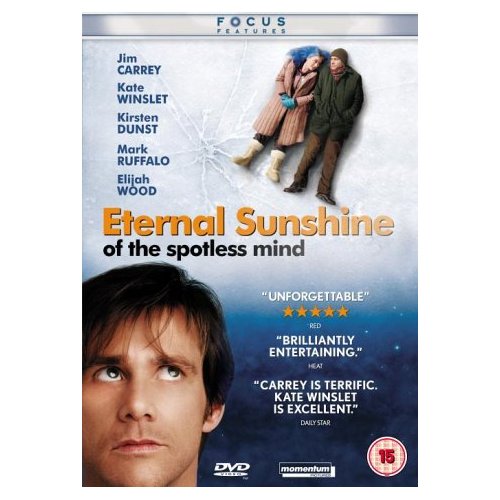 3. Eternal Sunshine of the Spotless Mind
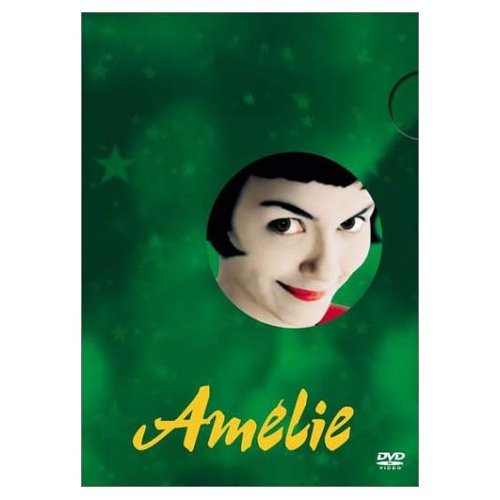 4. Amelie
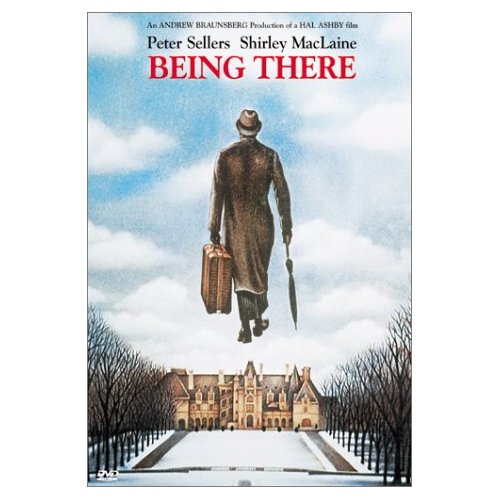 5. Being There*
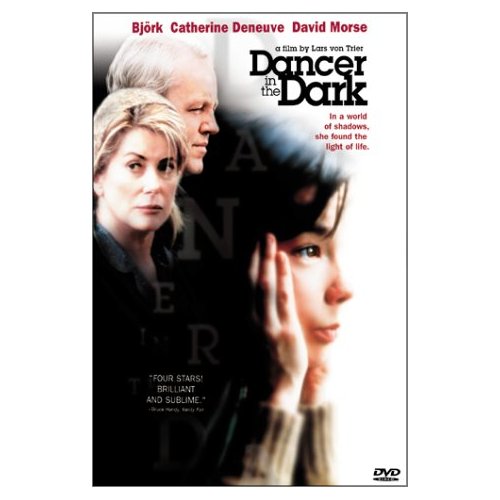 6. Dancer in the Dark
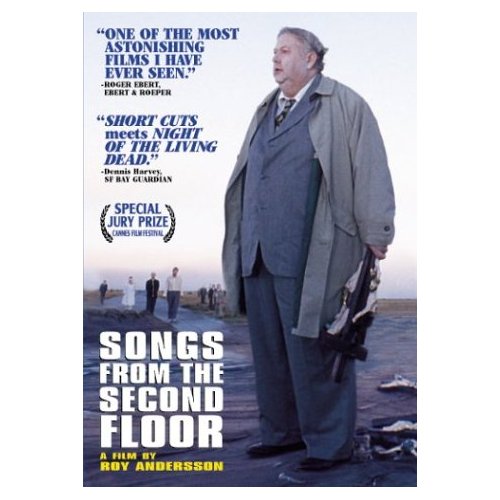 7. Songs from the Second Floor
 8. Donnie Darko
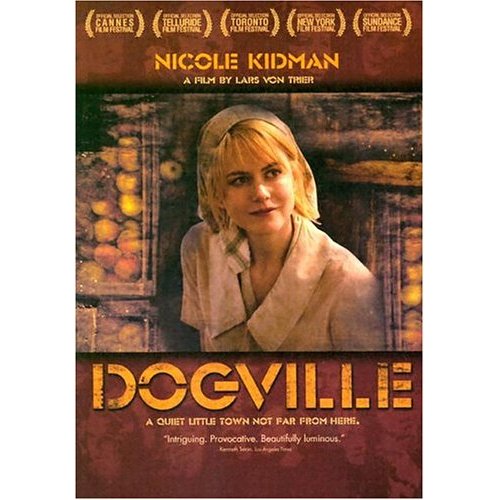 9. Dogville
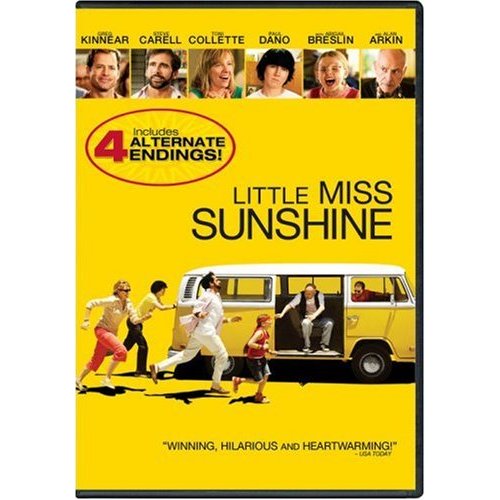 10. Little Miss Sunshine*
 11. Me and You and Everyone We Know
 12. THX 1138
Thursday, June 22, 2006
Naked World
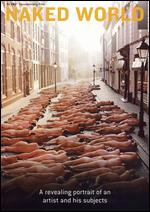 I watched this HBO documentary the other night. It was really quite beautiful seeing the artist's process behind the scenes. He took his camera and his crew to seven continents. It was intriguing learning about the different mores regarding nudity in the models as well as the spectators in the various cultures. Some were quite surprising in this regard. Let's just say France's mores aren't what you think and neither are England's when it comes to nudity. Some people, like the Russians, put a political spin on their nudity.
Spencer Tunick is not considered a photographer or an artist by some, but rather a megalomaniac who is just trying to be famous for doing something big. One does not get that impression from the meek man you see in the film. Whether he is an artist or a photographer or not, he is doing something extremely significant and wonderful. His art exists on three major levels. 1) He makes images that possess poetic expression. 2) He brings people together in large groups for the sake of art. And most importantly, 3) he brings healing to many by emboldening the afraid, the wounded, the overweight, and the scarred by bringing them into community with others who have shed their facades. They all express "transformation" after participating -- some in respect for their bodies, some in respect for other people, and some in terms of reclaiming the ownership of their own bodies. Tunick isn't just making art or photography, he is a healer.
One of the scenes that sticks in my mind in the documentary is when a Christian fundamentalist in Melbourne interrupts a pose involving 3000+ people by getting in front of Tunick's camera with a sign urging people to repent for their sins. The police dragged him off because the city had made the event legal for the sake of art. At first I was exasperated by this man--how could he NOT see the beautiful forest of flesh and healing before him and only see the individual trees? Then, I realized he only saw himself, and that made me sad. Then, I realized the irony of the situation: I assumed he came from a faith that involved an all-nude rapture. Maybe it's wrong on the ground, but not in the air? Then I laughed.
Wednesday, June 14, 2006
The Omen
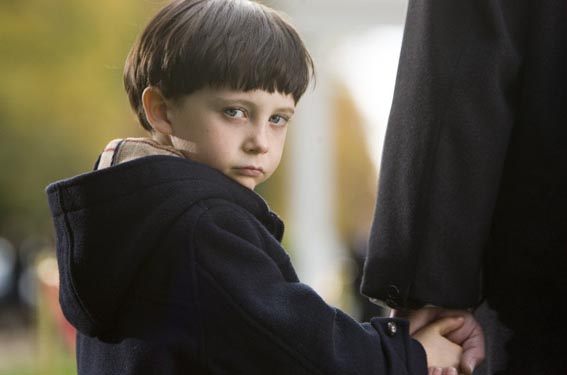 One of my favorite guilty pleasures is watching horror films. I like them for entertainment value, but mainly, I like them as an act of defiance. I DARE them to scare me. I've always believed that real life terror eclipses whatever Hollywood can come up with in terms of fear, and most horror films come off as dark or tragic comedies.
I saw the remake of this film last week. It was definitely a faithful adaptation of the original (which is important to me as a purist). It's a great piece of American lore and is particularly poignant at this time with all the strife, disasters, and political upheaval--and the popularity of "end times" theology. It really is good timing to come out with this one.
The film uses the traditional horror devices without a lot of bells and whistles. Gore is really unnecessary and you don't have to MTV-up everything, if you ask me. The filmmaker uses the subtlety of light, sound, music, color, and the element of surprise. One of the most notable features is that the filmmaker puts a hint of one particular shade of blood red in some item in every single shot--thereby unifying the film's "look". The red is in stark contrast with earth colors and grays. It really is a nice aesthetic device for this particular story.
Mia Farrow returns to the Satanic horror genre with gusto. She plays the nanny and the insane devotee of Damien and insane, she is. She's hardly the mousy Rosemary in this film. Liev Schrieber amply fills the shoes of Gregory Peck (which is hard to do), but it is Julia Stiles who virtually reincarnates Lee Remick's performance, but with her own personalized style. Lest I forget the anti-Christ himself, Seamus Davey-Fitzpatrick is a boy of few words who chillingly plays the role once made famous by Harvey Stephens. This Damien is probably scarier than the original to me, but the reader will have to see for him/herself.
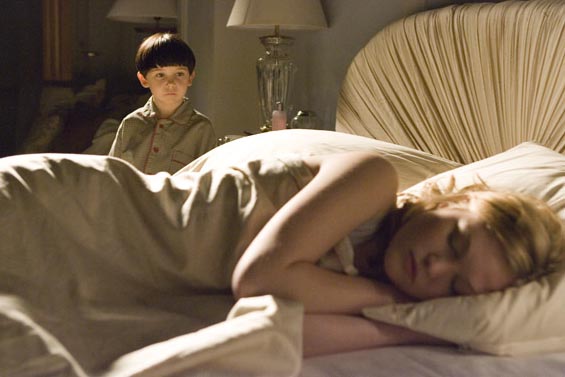
Overall, I would say it was a decent horror film. Mostly, it was a well-done remake. Did it scare me? No. Well, maybe when the Satanic rottweilers jumped at me. ; )
The Omen's official website
Friday, May 12, 2006
Guilty Pleasure: "The Master of Disaster"
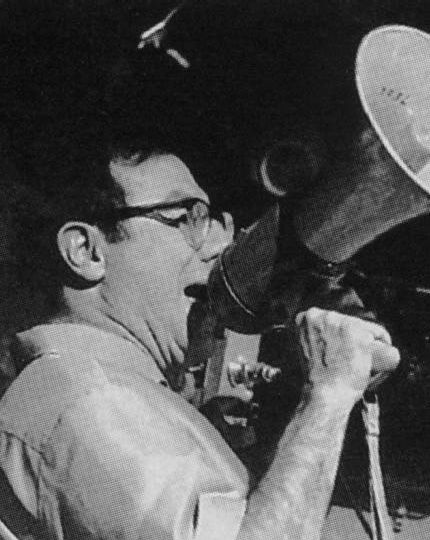
I heard this commentary this morning on Morning Edition on NPR. It discusses the remake of The Poseidon Adventure, Poseidon. The producer of the original is one of my personal favorites--Irwin Allen, the Master of Disaster. I would say it's a guilty pleasure of mine because watching disaster flicks appeals to my sense of morbid fascination. I have seen such notable films as The Poseidon Adventure, The Swarm, Fire!, Flood!, and of course, The Towering Inferno (my personal favorite) countless times. There's just something alluring about a film with big budget effects and watching Oscar winning celebrities in survival situations--far more interesting that today's "reality" television.
Internet Movie Database's file on Irwin Allen.

Monday, May 08, 2006
Setting Things Straight About Art Education
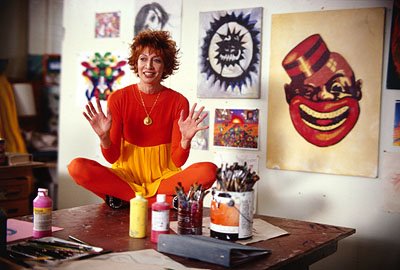 NOTE: Before you read this KNOW that I love and read comics and am a huge fan of the superhero genre (particularly drawn to the misfit or mutant themes).
This article discusses the premise behind the new film Art School Confidential. I have no doubt the film relies on stereotypes as a lot of comedies do, but I would like to discuss something other than that. The article brings up the chasm between art schools and comic book artists. To be honest, I have had friends who are comic book artists who went to art school and left with bad tastes in their mouths. I have also had comic book artists as students. As I have said, I love comics and always have. The reason why a lot of comic book artists leave art schools with numerous complaints, is that they are simply in the wrong place; that is, if that's all they want to do and nothing else--and some people know what they want to do at very young ages.
Often, art school is a bad experience for some comic book artists because of their expectations. Did they really expect to go to art school and be taught such a finite area of art, at the expense of everyone else's needs? Some actually do and did. Comic book illustration is illustration. It is an area of art--among many. It would be like if I wanted only to paint still lifes in oil and attended a school of figural art and expected them to change their curriculum to suit me. Art school is an experience. Its purpose is to make an artist well-rounded in the field of art. An artist has experiences in: drawing/painting still lifes, drawing/painting figures, 2-D design, 3-D design, printmaking, assemblage, mixed media, idea development, technique, conceptual art--you name it. An artist goes to art school for THESE experiences. An artist who draws comics CAN go to art school and BENEFIT from it--IF they are open to it. Being open to it is critical--as with any education.
Fortunately or unfortunately, depending on what you believe, some comic book artists tend to be very fixed in their path, and ONLY want to do what THEY want to do. I personally admire such focus and determination, but I'd like to pass on some advice. If ALL you want to do is draw comics and are not at all interested in the art school path, you should at least choose the right place to be. If you feel misunderstood, it's because you KNOW what you want to do, and the rest of your fellow students are EXPLORING (especially at the undergraduate level). When I went through art education, I couldn't get enough of all the different media, subjects, and ideas, but that's just my experience. Because illustration is a subcategory of the arts (and comic book art, an even more finite subcategory of illustration), and more related to graphic art, fine art school probably isn't the place for you. While comics can be artful, I wouldn't expect it to be considered fine art any time soon. It is what it is and there is nothing wrong with that. I would highly recommend, if you aren't interested in benefiting from instruction that flexes your creative, technical, and conceptual muscle in a fine art school, that you look into the numerous illustration schools available to practice your craft. If you are interested in animation or video game design, there are schools for that too. You simply need to consider what you want to do, choose the right place to be, cultivate your art/craft, be the best you can be, and try not to nurture a persecution complex because your art teacher doesn't understand your desire to draw comics. It's more likely that he or she just wants you to expand your horizons--because that is his or her job where HE/SHE works (i.e. what he/she gets paid for). It's just that simple.
Saturday, May 06, 2006
A Short Film Review: Mirrormask
WARNING: Spoilers ahead.
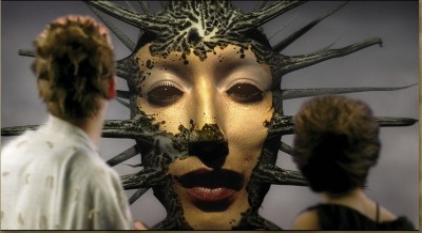
This review is necessarily short, for words would fail me to express the utter visual sumptuousness of this movie. It is the movie Tim Burton wished he had made (in my words). And I do love Tim. There is a richness of artistic knowledge in this film as well as an acute awareness of the dynamics of the writing of a "modern" faerie tale in the intriguing writing of Neil Gaiman. It is the story of a girl named Helena who was raised in a circus family and who loves to draw quirky characters and environments. When her mother falls ill, she has a dream in which she embarks on a quest to find a "mirrormask"--something she has no idea the appearance or purpose of--but it is nonetheless important. The word itself sounds like a word in dreams--the hybrid words that we hear or say that have tremendous meaning about our identities. I'm sure if you think hard enough, you'll remember that one dream in which a word was uttered, and upon waking, you thought--'what in the world does that mean?' In this case it reveals her waking life's struggle with teen angst and becoming an adult. The world of the dream is derived from her waking life's drawings. She discovers that an evil version of her mother (in the dream) has sought to get her daughter back (an evil one), but that daughter has disguised herself as the Helena in waking life. Her real mother in the dream takes on the archetypal role of the sleeping queen/princess. Helena must look through a window onto the world the evil changeling is in while wearing the mirrormask -- a mask that has a reflective outer surface that merges with the glass and changes the position of the heroine with the "bad daughter"-- who is reflective of Helena's negative behavior toward her mother before she took ill and Helena's subsequent guilt.
While watching the film, J. noted the esoteric quality of the film and wondered what audience it would be made for. So I came up with a list: The people who like this film are people who like(d):
Jim Henson (his company made some of the puppets)
Tim Burton
Neil Gaiman
Salvador Dali
Yves Tanguy
Hans Bellmer
Lovers of modern comics
Alice and Wonderland
The Wizard of Oz
Rembrandt's ink drawings
A Series of Unfortunate Events
Max Ernst
Odilon Redon
Labyrinth
The Dark Crystal
H.R. Giger
I could go on and on....so basically not that esoteric at all.
As a visual artist, of course, the visuals are what appeal most to me. The story is an archetypal faerie tale with a basic plot that has hints of Alice and Dorothy, but has still holds onto its own distinct voice. The visuals are unparalleled in recent years, in my opinion. I highly recommend it for that reason.


© Stephanie Lewis, 2006
This review is necessarily short, for words would fail me to express the utter visual sumptuousness of this movie. It is the movie Tim Burton wished he had made (in my words). And I do love Tim. There is a richness of artistic knowledge in this film as well as an acute awareness of the dynamics of the writing of a "modern" faerie tale in the intriguing writing of Neil Gaiman. It is the story of a girl named Helena who was raised in a circus family and who loves to draw quirky characters and environments. When her mother falls ill, she has a dream in which she embarks on a quest to find a "mirrormask"--something she has no idea the appearance or purpose of--but it is nonetheless important. The word itself sounds like a word in dreams--the hybrid words that we hear or say that have tremendous meaning about our identities. I'm sure if you think hard enough, you'll remember that one dream in which a word was uttered, and upon waking, you thought--'what in the world does that mean?' In this case it reveals her waking life's struggle with teen angst and becoming an adult. The world of the dream is derived from her waking life's drawings. She discovers that an evil version of her mother (in the dream) has sought to get her daughter back (an evil one), but that daughter has disguised herself as the Helena in waking life. Her real mother in the dream takes on the archetypal role of the sleeping queen/princess. Helena must look through a window onto the world the evil changeling is in while wearing the mirrormask -- a mask that has a reflective outer surface that merges with the glass and changes the position of the heroine with the "bad daughter"-- who is reflective of Helena's negative behavior toward her mother before she took ill and Helena's subsequent guilt.
While watching the film, J. noted the esoteric quality of the film and wondered what audience it would be made for. So I came up with a list: The people who like this film are people who like(d):
Jim Henson (his company made some of the puppets)
Tim Burton
Neil Gaiman
Salvador Dali
Yves Tanguy
Hans Bellmer
Lovers of modern comics
Alice and Wonderland
The Wizard of Oz
Rembrandt's ink drawings
A Series of Unfortunate Events
Max Ernst
Odilon Redon
Labyrinth
The Dark Crystal
H.R. Giger
I could go on and on....so basically not that esoteric at all.
As a visual artist, of course, the visuals are what appeal most to me. The story is an archetypal faerie tale with a basic plot that has hints of Alice and Dorothy, but has still holds onto its own distinct voice. The visuals are unparalleled in recent years, in my opinion. I highly recommend it for that reason.


© Stephanie Lewis, 2006
Tuesday, March 21, 2006
V for Vendetta: Ideas Are Bulletproof

I have only this to say....Go see this movie while films with content of this sort are still legal. ; )
Friday, December 02, 2005
A Quote Comes to Mind

One of my favorite comedy films of all time is "Brain Candy" starring the Canadian comedy troupe Kids in the Hall. If you haven't seen it, you simply should. It's the story of these scientists who invent the cure for depression and the unfortunate side effect that ensues. The quote that comes to mind today is one that the character Mrs. Hurdicure (or "Patient 957") states after taking "the drug" for the first time. Upon being asked by the scientists how she feels, she states,
"I feel like God is rubbing my tummy."
Now there's an image.

Thursday, November 17, 2005
Me and You and Everyone We Know
A few weeks ago, I watched this provocative and poetic little film about the quirkiness of human behavior, love, and growing up. Of course, that summary is inadequate. Here is a link to the film's website. The film is probably not for all as it involves some controversial subject matter, but a good film nonetheless.
The filmmaker, Miranda July, is a visual artist in her own right. On her site, mirandajuly.com, you can find interactive activities. One of the more interesting and fun pages is the "Learning to Love You More" page that provides the websurfer with "assignments" to complete and turn in which are then shared with the rest of the audience. These "assignments" have limitations and criteria. Some examples of "assignments" are as follows:
#50 Take a flash photo under your bed. Here is Rebecca Croft's photo:

#53 Give advice to yourself in the past. Here is Julia Henderson's response:
"Advice to Julia K.Henderson at age 10.
1. Math will never be your strong point. Ms.Bell knows you are smart, but stop worrying about what she thinks!
2. Concentrate on your art, it s beautiful.
3. Love the fact that you are a choir geek ! You love to sing and it s wonderful.
4. You have beautiful hair and flawless skin, stop worrying about being chubby. The cushioning will redistribute and be wonderful assets soon.
5. Relax a little. The world is not going to fall apart if you stop telling it what to do. Promise."
There are 51 more of these "assignments" and the results are fun to look at if you decide not to participate. Some are even potentially therapeutic if you do decide to participate.
© Stephanie Lewis, 2005
The filmmaker, Miranda July, is a visual artist in her own right. On her site, mirandajuly.com, you can find interactive activities. One of the more interesting and fun pages is the "Learning to Love You More" page that provides the websurfer with "assignments" to complete and turn in which are then shared with the rest of the audience. These "assignments" have limitations and criteria. Some examples of "assignments" are as follows:
#50 Take a flash photo under your bed. Here is Rebecca Croft's photo:

#53 Give advice to yourself in the past. Here is Julia Henderson's response:
"Advice to Julia K.Henderson at age 10.
1. Math will never be your strong point. Ms.Bell knows you are smart, but stop worrying about what she thinks!
2. Concentrate on your art, it s beautiful.
3. Love the fact that you are a choir geek ! You love to sing and it s wonderful.
4. You have beautiful hair and flawless skin, stop worrying about being chubby. The cushioning will redistribute and be wonderful assets soon.
5. Relax a little. The world is not going to fall apart if you stop telling it what to do. Promise."
There are 51 more of these "assignments" and the results are fun to look at if you decide not to participate. Some are even potentially therapeutic if you do decide to participate.
© Stephanie Lewis, 2005
Subscribe to:
Posts (Atom)