Some say the world will end in fire,
Some say in ice.
From what I've tasted of desire
I hold with those who favour fire.
But if it had to perish twice,
I think I know enough of hate
To say that for destruction ice
Is also great
And would suffice.
Wednesday, April 26, 2006


Thursday, April 20, 2006
Artifact

Pictured above is a little item I found on my bedroom floor. At first I thought it was a leaf. I swear my house is not a pit, so it is strange that something like this would appear. We looked it up on the computer and it is, in fact, a dried baby mouse carcass. I have no idea where it came from or how it avoided be swallowed whole by one of my two cats, if it came in on some thrift items we bought, or whether it had been hiding all along and been there since before I moved in. It is a mystery. Still, as disturbing as it is, there's something aesthetic about it. Don't you think?
Tuesday, April 11, 2006
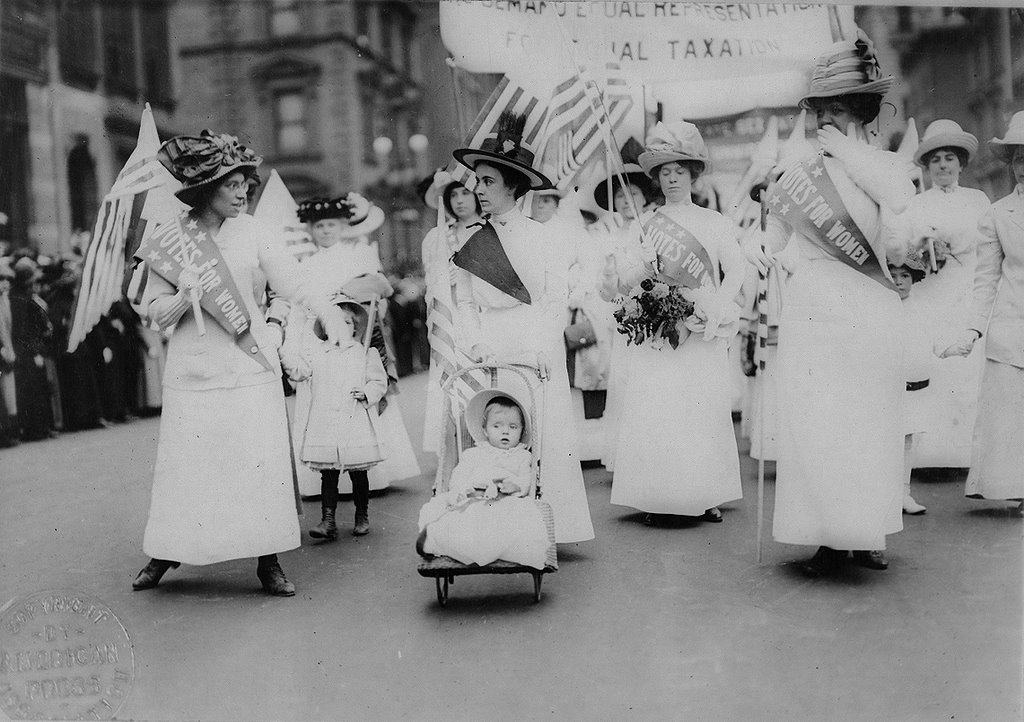
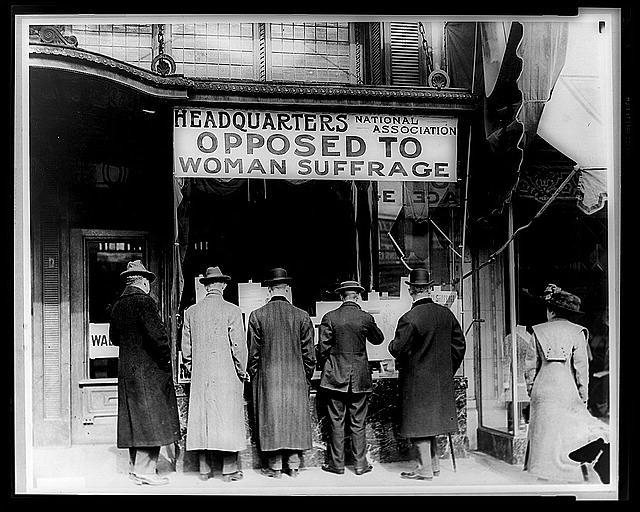
This Does Not Give Me Hope
Feel like ending women's suffrage? These ladies do.
suffrage: def. the right to vote in a political election or the exercise of this right.


suffrage: def. the right to vote in a political election or the exercise of this right.
Tuesday, April 04, 2006
Slides and Prejudice
 Richard Estes
Click on the title of this entry to read the article referenced in this blog entry.
Just so you know my thoughts up front, photorealism is a legitimate art movement. It is not the ONLY art movement, however. PhotoREALISM is also a misnomer. There is no more reality in a photograph than there is in my dreams at night (but that's a philosophical discussion for another time).
This article addresses the 100+ year old debate about whether it is kosher to use photographs to make paintings. Some artists are called photorealists because their whole purpose is to mimic the vestige of a photograph. Other artists use photographs as points of departure (which I personally prefer when I use them) for compositional experimentation and abstraction.
It always fascinates me how people will mislabel their emotions about things. Under every presenting or stated emotion is the REAL emotion. Some people in this article referred to "guilt" about "cheating" with using photographs as source material for their paintings. Perhaps what they are really feeling is a certain malaise over the limitations of the human imagination, or the West's obsession of "realism" in art, which is shared by almost no other cultures who are not afraid to explore pattern and invention and abstraction. Those things have always been at the bedrock of those cultures' histories of art-making. Those cultures' artistic expressions have also pushed themselves into the West's awareness as the world has shrunk to the present day. Maybe what today's artists are feeling is a certain redundancy and irrelevance and Sisyphian-like cycle of pushing the rock of "copying" up that hill, only to do it over and over and over again -- to the oooohs and aaaaahs of the intoxicating accolades of people who are wowed by what is perceived as sterling perfection of technique.
No, I don't think photorealists or people who use photographs should feel guilty. I adore photorealists like Richard Estes and Audrey Flack, amongst others. Artists have used "optics," as the article stated, for a very long time. Artists have "tricks of the trade" and tools and aren't afraid to use them. Perhaps it is just that photorealism itself has worn out its welcome in the age of Photoshop. Perhaps the artists themselves are tired of it and are afraid to change for fear of losing popular acclaim. Perhaps they are becoming more aware of the inventive movements exploding on the art scene right now and they feel a little backward. Guilt? No.
What do you think?
Friday, March 31, 2006
Kinkade Watch: Apparently He's an "Idol" to the Women Who Sell His Work
...amongst other things.
Here are some notable quotes in the article from the critics. I agree 100%.
Here are some notable quotes in the article from the critics. I agree 100%.
The critics on Kinkade
"A Kinkade painting was typically rendered in slightly surreal pastels. It typically featured a cottage or a house of such insistent cosiness as to seem actually sinister, suggestive of a trap designed to attract Hansel and Gretel. Every window was lit, to lurid effect, as if the interior of the structure might be on fire. The cottages had thatched roofs, and resembled gingerbread houses. The houses were Victorian and resembled idealised bed-and-breakfasts ... "
Joan Didion
"[One painting] features mountains and quiet shadows and the purple cloak of sunset, but it could just as easily have featured a lavishly blooming garden at twilight, or maybe a babbling brook spanned by a quaint stone bridge, or a lighthouse after a storm; it's hard to distinguish one Kinkade from the next because their effect is so unvarying - smooth and warm and romantic, not quite fantastical but not quite real, more of a wishful and inaccurate rendering of what the world looks like, as if painted by someone who hadn't been outside in a long time."
Susan Orlean, the New Yorker
"There's always been starter art, but Kinkade is the lowest form of starter art I've ever seen."
San Francisco gallery owner
_____________________________________________________________
What I find most entertaining about Kinkade is his insane ego. These quotes are quite revelatory:
-- "He denied the harassment allegation, but said in a deposition: "You've got to remember, I'm the idol to these women who were there. They sell my work every day, you know. They're enamoured with any attention I would give them. I don't know what kind of flirting they were trying to do with me. I don't recall what was going on that night."
In his email he said that long after "this absurd negativity" had subsided, "I will still be here, sitting in front of my easel, trying my best to share the light."
-- "The No 1 quote critics give me is, 'Thom, your work is irrelevant.' Now, that's a fascinating, fascinating comment. Yes, irrelevant to the little subculture, this microculture, of modern art. But here's the point: My art is relevant because it's relevant to 10 million people. That makes me the most relevant artist in this culture."
Hey Thom, I have a newsflash for you. Modern art is not a subculture NOR a microculture, that is, unless your ego is astronomically big enough to transcend the present time and space and the world revolves around you. Modern art began with Manet (middle of the 1860s), and incidentally, we've been in the Postmodern Art age for almost 40 years now. You might want to catch up. You sell sentimentality and manipulate with false comfort. Art isn't art because it's popular. Art is art because it's significantly reveals the depths of the people of a culture of a specific time and place. People love Precious Moments figurines, Beanie Babies, and paintings-by-numbers, but that doesn't make those things art.
Subscribe to:
Posts (Atom)